|
The
monumental ethnographic work on the land and its people
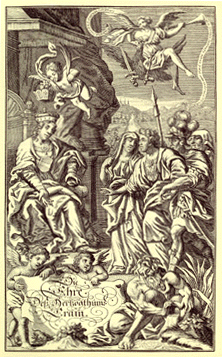
The book written in German language
and published in 1989 under the title Die Ehre des Herzogtums
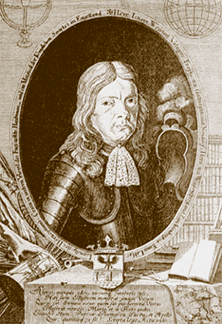
Crain was the last published worked by Janez Vajkard Valvasor
(1641 – 1693), a native of Ljubljana, nobleman, commander
in the Austrian army, historian and polymath.
Honoured and admired by his contemporaries,
he received the great distinction of being made a member of the
English Royal Society. In the following centuries Slovenian poets
and writers used the book as a rich resource for their own work.
Today Valvasor’s book is recognized as an extraordinary work
of scholarship and a unique contribution to the social history
of Slovenian people.
|
It was an extraordinary and unique
work in its own time, admired for its painstainking investigation,
observation and vivid descriptions, as well as its scope. It is
also destinguished for its engravings and copperplates. It is
entirely due to Janez Vajkard Valvasor, that we know what cities
and towns, castles and monasteries looked like in the 17th Century
and how Slovenian people went about their daily lives.
Founded on archival materials which
no longer exist, it also provides insight into an important historical
period of Slovenian history: reformation and anti-reformation,
Turkish incursions, peasant revolts. As importantly he describes
the life in cities, towns and villages. customs, beliefs and superstitions,
and more. Valvasor has produced much more than compilation of
historical facts. He is interested in what people think and believe
and so has given us a social history which is invaluable in giving
insight into the 17th century Carniola and so the major
part of what is called Slovenia today.

|